As autumn settles in, the freezing temperatures of winter aren’t far behind. Preparing your home before the first hard freeze hits is the best way to prevent uncomfortable disruptions and costly emergency service calls.
Your plumbing and heating systems work overtime throughout the winter months. Catching subtle warning signs early allows you to address repairs on your schedule rather than dealing with a sudden breakdown in the dead of winter. Here are the key indicators that your home’s plumbing and heating systems need professional attention before cold weather arrives.
Warning Signs Your Heating System Needs Repair
A reliable heating system is essential for safety and comfort during the coldest months. Watch out for these common red flags before turning your thermostat up for the season:
1. Uneven Heating or Cold Spots
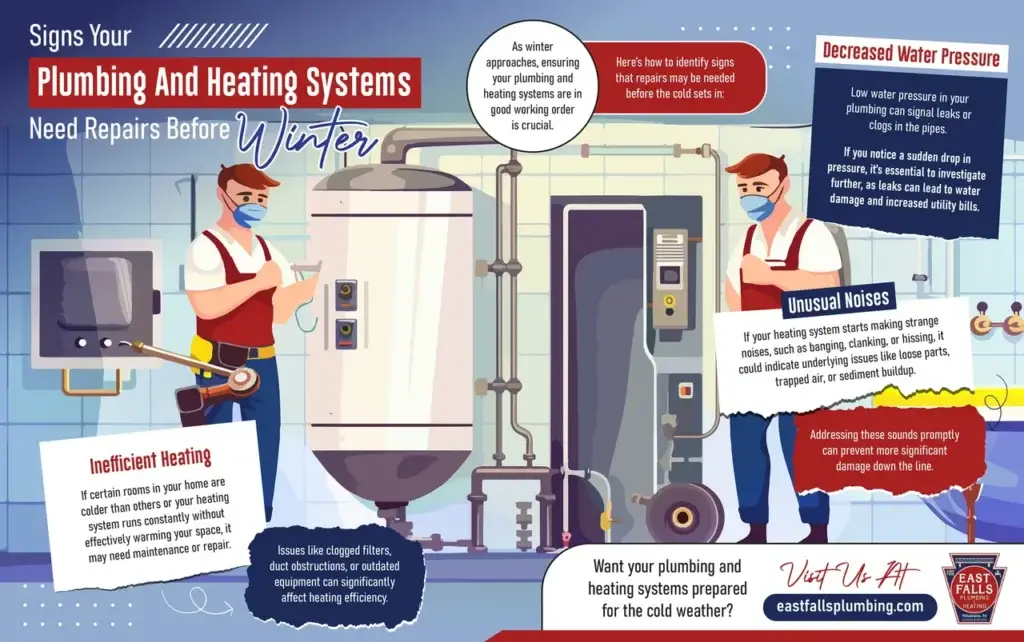
If certain rooms remain chilly while others overheat, or if your radiators and vents deliver tepid air, your system is struggling. This issue often stems from air trapped in radiator lines, failing zone valves, ductwork leaks, or a declining blower motor.
2. Strange Noises During Operation
While heating systems make mild operational sounds, persistent or loud noises indicate underlying mechanical trouble:
- Banging or Clanking: Often caused by thermal expansion in pipes, loose components, or delay in burner ignition.
- Squealing or Whining: Typically points to a belt or bearing failure in the blower motor.
- Gurgling: Common in hydronic (boiler) systems with air trapped in the lines.
3. Frequent Cycling (Turning On and Off Rapidly)
If your furnace or boiler turns on and off constantly without reaching the set temperature, it is short-cycling. This strains electrical components, increases fuel consumption, and is usually caused by a faulty thermostat, dirty airflow filters, or a failing sensor.
4. Unusual Smells
A faint dusty smell when turning on your heater for the first time is normal. However, persistent burning odors, metallic smells, or any gas-like odor (which requires immediate evacuation and service) signal dangerous system faults that demand immediate professional inspection.
Warning Signs Your Plumbing System Needs Attention
Freezing conditions put immense pressure on household pipes. Pre-existing plumbing vulnerabilities can quickly turn into burst pipes and serious water damage when temperatures dip below freezing.
1. Slow Drains and Recurring Clogs
Slow drainage in sinks, tubs, or main lines might seem like a minor annoyance in warm weather, but standing water in pipes can freeze rapidly in unheated areas like basements, crawlspaces, or outer walls, leading to severe blockages or pipe ruptures.
2. Fluctuating Water Pressure
A sudden drop in water pressure across your fixtures often indicates hidden leaks, heavy mineral scale buildup in aging pipes, or municipal pressure issues. Unaddressed leaks inside walls or under slabs can freeze and burst during winter drops.
3. Discolored Water or Foul Odors
Rust-colored or murky water usually points to internal pipe corrosion or sediment buildup inside your hot water heater. Corroded pipes are far more prone to cracking under the added pressure of winter thermal contraction.
4. Water Heater Inefficiency
If your water heater takes significantly longer to heat water or fails to supply enough hot water for standard daily use, it is likely coated in heavy sediment or suffering from failing heating elements. Cold winter inlet water forces your water heater to work harder, making pre-season maintenance vital.
Essential Pre-Winter Checklist for Homeowners
Taking proactive steps now can save you time, stress, and money later. Use this quick checklist to prep your home before winter:
- Insulate Exposed Pipes: Wrap unheated pipes in basements, attics, and exterior walls with pipe insulation sleeves.
- Disconnect Outdoor Hoses: Drain and detach all garden hoses, and turn off interior shutoff valves leading to outdoor spigots.
- Replace HVAC/Furnace Filters: Install fresh filters every 1 to 3 months to maintain proper airflow and system efficiency.
- Test the Thermostat: Turn your system to heating mode early in the season to ensure it responds accurately.
- Schedule Professional Maintenance: Have licensed technicians perform an annual safety inspection and tune-up on both your plumbing and heating equipment.
Protect Your Home This Winter
Don’t wait for the first winter storm to test the limits of your home’s vital infrastructure. Addressing minor leaks, unusual noises, and system inefficiencies today ensures your home remains warm, safe, and comfortable all season long.
If you notice any of these warning signs in your home, contact a professional technician to schedule an inspection and tune-up before winter arrives.