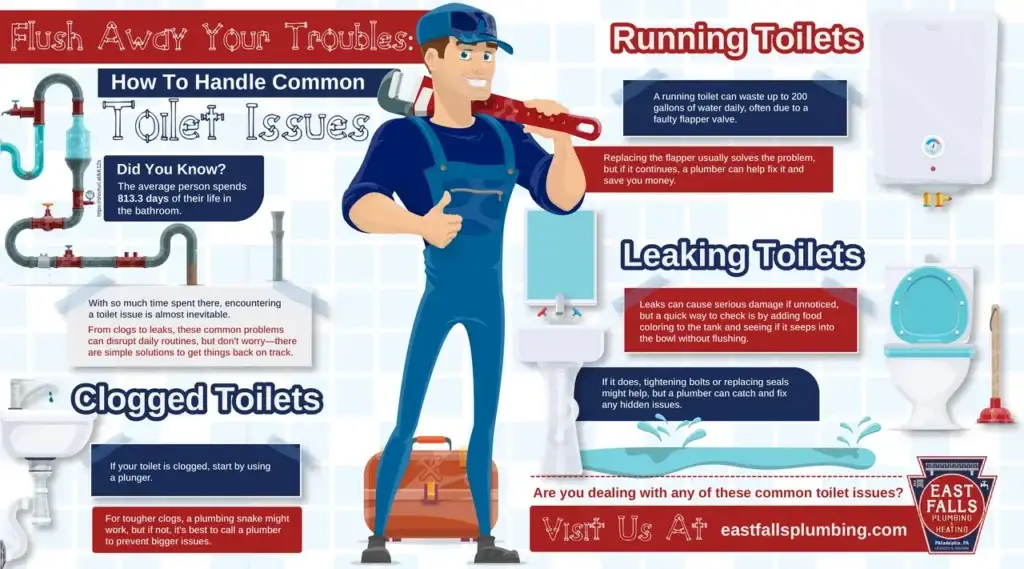
Did you know the average person spends roughly 813 days of their life in the bathroom? Considering how much time we spend there, running into a toilet issue isn’t a matter of if—it’s a matter of when.
When a toilet breaks, leaks, or overflows, it can derail your day fast. Fortunately, not every plumbing problem requires an emergency callout. Here is a guide on how to identify and handle some of the most common toilet issues in your home.
1. The Clogged Toilet
A clogged toilet is easily the most common plumbing headache. It usually happens when excess paper, non-flushable wipes, or foreign objects get stuck in the trapway.
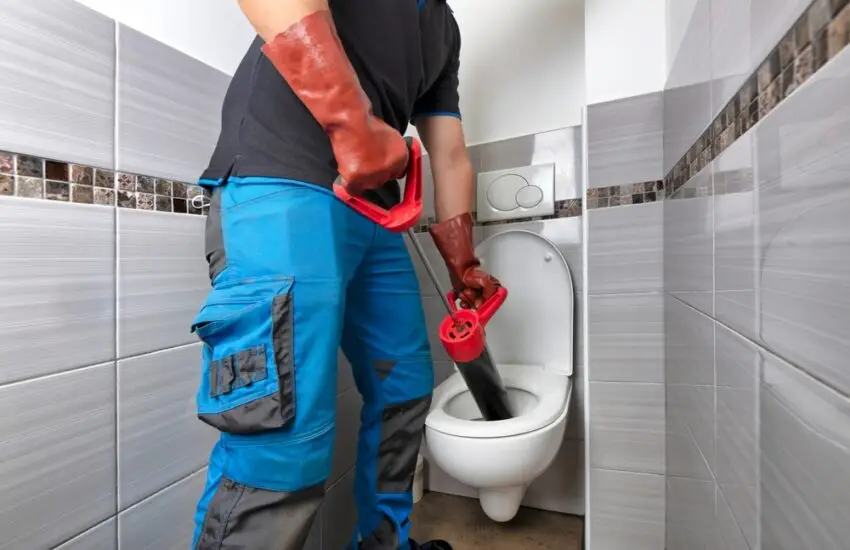
- How to Handle It: Grab a heavy-duty flange plunger (the kind with an extended rubber sleeve at the bottom, designed specifically for toilets). Ensure a tight seal over the drain hole and plunge firmly up and down. If a plunger doesn’t clear the obstruction, a toilet auger (plumbing snake) can help break up or pull out stubborn blockages without scratching the porcelain.
- Pro Tip: Never flush wipes, paper towels, or feminine hygiene products—even if the packaging claims they are “flushable.”
2. The Running Toilet
If your toilet sounds like it’s constantly filling up with water long after you’ve flushed, you’re dealing with a running toilet. Beyond being noisy, this issue can waste hundreds of gallons of water a month and drive up your utility bill.
- How to Handle It: Remove the tank lid and check the flapper valve at the bottom. Over time, rubber flappers deteriorate, warp, or accumulate mineral deposits, preventing a proper seal.
- Check if the flapper chain is tangled or too short, preventing the flapper from closing fully.
- If the flapper looks worn or feels sticky, turn off the water supply valve behind the toilet, drain the tank, and swap the old flapper for a inexpensive replacement from your local hardware store.
- Inspect the fill valve float. If it’s set too high, water will continuously spill into the overflow tube. Adjust the float adjustment screw to lower the water level.
3. The Leaky Toilet Base
Water pooling around the base of your toilet on the bathroom floor should never be ignored. It can rot your subfloor, damage ceiling materials underneath, and cause mold growth.
- How to Handle It:
- First, check the supply line connections and the tank bolts to make sure water isn’t dripping down from above.
- If the leak is coming directly from underneath the base when you flush, the wax ring seal between the toilet horn and the closet flange has failed.
- Fixing this requires shutting off the water, disconnecting the supply line, unbolting the toilet from the floor, scraping off the old wax ring, and installing a new wax ring or foam seal before re-mounting the toilet.
4. Weak or Incomplete Flush
Does your toilet require multiple flushes or leave waste behind? A weak flush can be frustrating and inefficient.
- How to Handle It:
- Water Level: Check the water level inside the tank. It should sit about $1/2$ inch to $1$ inch below the top of the overflow pipe. If it’s too low, adjust the float on the fill valve.
- Flapper Chain Slack: Make sure there isn’t too much slack in the lift chain; if it’s too loose, the flapper won’t open fully during a flush.
- Mineral Deposits: Mineral deposits can clog the jet hole or the small rinse holes under the bowl rim. Use a small wire or stiff brush dipped in vinegar to clean out those openings.
When to Call the Professionals
While many minor toilet repairs make great DIY projects, some situations require an experienced hand. If you encounter recurring clogs, cracks in the porcelain tank or bowl, sewage backups, or leaks that cause floor damage, reach out to the professional team at East Falls Plumbing & Heating! We’ll get your plumbing running smoothly again so you can get back to your day stress-free.